Sammy Credenza
 For children
 Linen & Light
 Concrete & Grain
 First Room
 Cafés, shops, offices
 Rooms and nooks, fitted
 Our story
Choosing a made-to-order furniture maker in Dubai comes down to nine questions: who makes it, where, from what, if you can see it, how the edges are finished, what happens if it arrives damaged, whether sizes can change, whether they take on whole rooms, and how you pay. A good maker answers all nine plainly and quickly. A reseller with a nice website stalls on at least three. This guide sets out each question, what a good answer sounds like, and our own answers from our Dubai workshop.
Why the questions matter more than the photographs
Every furniture listing in the UAE has good photographs now. Renders are cheap, and a styled showroom tells you nothing about the piece in your apartment in three years. What separates a maker from a middleman is what they can tell you about the thing in the pictures: which sheet it comes from, who cuts it, how the edge is treated, what happens when something goes wrong. Ask the questions in a WhatsApp message and read the reply for speed, detail and whether a person is answering.
The nine questions
1. Who actually makes it?
The most useful question, because it sorts makers from sellers in one line. A good answer names people and a trade: a family, a team of carpenters, a workshop. A poor answer is a brand name and a change of subject. If the person replying cannot tell you who will cut your piece, they are not the maker.
Ours: Viara designs; Adam and the team build. We are a family and we have made every piece ourselves since 2021.
2. Where is it made?
A good answer is an address in an industrial area and an invitation to visit. It does not need to be a showroom. It needs to be a place where sheets are cut and pieces are finished, and where you could stand and watch if you wanted to. A poor answer is "locally" or "in the region", which usually means a container.
Ours: our own workshop in Dubai. Visits are by appointment because it is a working workshop, not a shop.
3. What is it made from?
Ask for the board by name and the finish by type. "Birch plywood, sealed, with a water-based stain" is an answer. "Premium wood" is not. Ask for a sample, and if you want the paperwork on the board and the finish, ask for that too; a maker who has it will send it. For the differences between boards and why they matter in an air-conditioned home, our guide to birch plywood, MDF and solid wood covers it.
Ours: birch plywood throughout, sealed on every face and edge, with or without a water-based stain in Natural, Snow, Sand or Smoke. Oak plywood on request for some pieces.
4. Can I see it before I commit?
You should be able to see something real: a finish sample in your hand, close-up photographs of edges and joints on a finished piece, work in progress on the bench, or the workshop itself. A maker who only has renders has not made it yet. A good answer offers at least two of those unprompted.
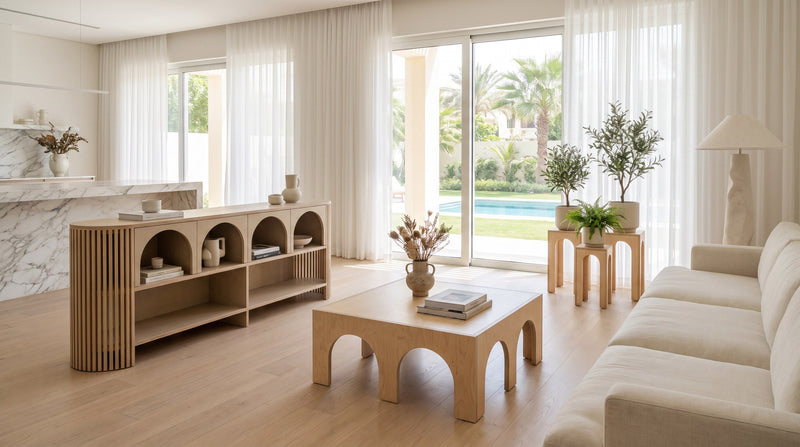
Ours: samples of the four finishes, photographs of pieces in progress, and a visit by appointment. Ask what is on the bench that week; if a Sammy plywood credenza is being finished, you can see the edge and the finish on a real piece.
5. How are the edges finished?
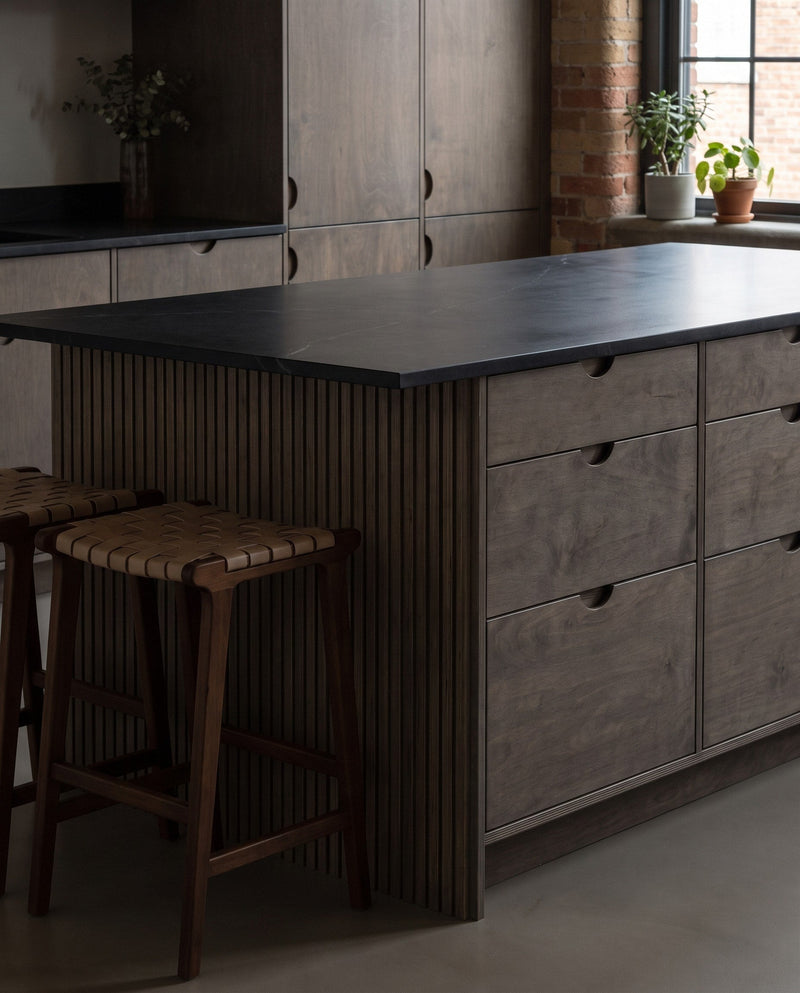
On plywood this is the question that tells you how careful the maker is, because the cut edge is where the layers show and where the work is. A good answer describes sanding through grits, rounding the corners, and sealing the edge along with the faces. A poor answer is "edge banding", which is tape over the cut, or silence. Ask specifically about the inside of cut-out handles and the back edge you will never see; that is where corners get cut.
Ours: every edge sanded until the stripes read as one surface, corners rounded where a hand passes, then sealed with the rest of the piece, back and underside included. On the Zoe tall plywood side cabinet the end grain of the door slats is the front of the piece, so the edge is not just finished, it is the design.
6. What happens if it arrives damaged?
Things get knocked in vans. What matters is what happens next. A good answer is a plain process: photograph it before the driver leaves, message us, and we will put it right. A poor answer is a paragraph of conditions, or a policy page you have to find yourself. The point of buying from a maker is that the people who can fix the piece are the people who made it.
Ours: photograph anything that is not right on the day it arrives and send it to us. The piece came off our bench, so the repair or the replacement part comes from the same bench. We would much rather hear the same day than a month later.
7. Can you do a custom size?
A workshop that cuts to order can usually adjust a standard piece for a specific wall: shorter for an alcove, narrower for a corridor, a different door count. A good answer is "send us the measurement" and a straight yes or no once they have it, with the change in cost stated before anything is cut. A fixed catalogue with no way to change it tells you the maker is somewhere else.
Ours: yes for most pieces. Standard sizes are on each product page, and the Boho Soul plywood sideboard already comes in two-, three- and four-door versions; send the wall measurement and we will tell you what is possible beyond that. Our guide to ordering custom furniture in Dubai explains how that conversation runs from first message to delivery.
8. Do you take on whole rooms and larger projects?
Not every maker wants to, and that is fine, but you should know before you start. A good answer tells you what they have done: a nursery, a school, a home office, a café, a run of built-in shelving, and who you will deal with. A poor answer says yes to everything without asking a single question back.
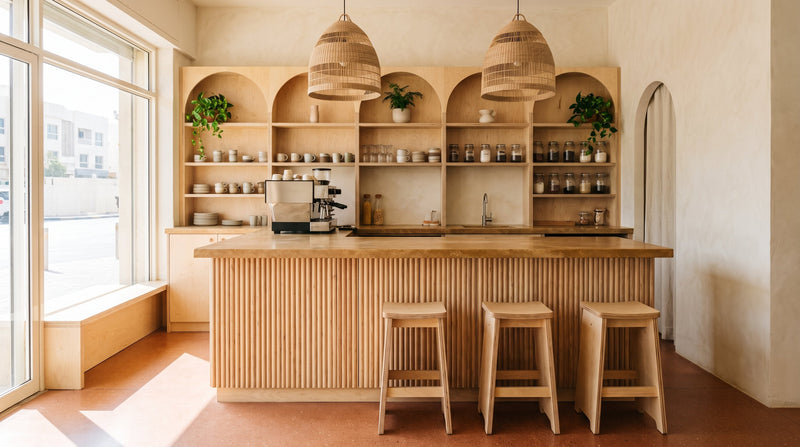
Ours: yes, and personally. We have furnished nurseries, schools and family homes across the UAE, and larger projects, from whole rooms to built-in joinery, offices and cafés, are handled by us directly rather than through a form. Start on WhatsApp or the contact page with photographs and rough measurements.
9. How do I pay?
For a standard piece the answer should be simple: pay at checkout, get a VAT invoice. For custom work the usual and reasonable structure is a deposit to start the work and the balance before delivery, in writing, with the drawings agreed before the deposit is taken. Be wary of full payment up front for a custom piece from a maker you have not met.
Ours: store pieces are paid at checkout; prices shown include 5% VAT — the price you see is the price you pay — and a VAT invoice is issued with every order. Custom work is a deposit, then the balance before delivery, once the drawings are agreed.
The questions at a glance
| Question | What a good answer sounds like |
|---|---|
| Who makes it? | Named people and a trade: a family, a team, a workshop |
| Where? | An address in an industrial area and an invitation to visit |
| What is it made from? | Board and finish by name, a sample offered, documentation on request |
| Can I see it? | Samples, close-up photographs, work in progress, or a visit |
| How are the edges finished? | Sanded, rounded and sealed, including the edges you will not see |
| If it arrives damaged? | Photograph it, message us, we put it right; no conditions to hunt for |
| Custom sizes? | "Send the measurement", then a clear yes or no and the cost before cutting |
| Whole rooms and projects? | Examples of what they have done and a person to deal with |
| How do I pay? | Checkout for store pieces; deposit then balance before delivery for custom, in writing |
Reading the answers together
No single answer decides it. What you are looking for is a pattern: the same person answering every question, specifics rather than adjectives, and no hesitation on the awkward ones about damage and money. A maker who is proud of the edge will tell you about the edge without being asked. A maker who cannot say where the workshop is will not improve on the other eight. If the replies come from someone who has clearly stood at the bench, you have found what you were looking for, whichever workshop it is.
From the workshop
The reason we can answer question five in detail is that it is most of what we do. A sideboard carcass is cut in a morning and finished over days, and nearly all of that time is edges: the long edge of a top through three grits, the inside of a handle cut-out by hand because a machine cannot reach, the corner rounded so a hip passing in a hallway meets a curve. Then stain, if the piece has one, then sealer over every face and edge, then time to cure before it is wrapped in blanket and film. When someone asks whether we can shorten a piece for an alcove, the honest answer is that the cutting is the quick part; the edges take the time, and we do them the same whatever the length.
Frequently asked questions
How do I know if a Dubai furniture company actually makes its own furniture?
Ask who makes it and where, and ask to visit. A maker gives you names, an industrial-area address and a time. A reseller gives you a brand name and photographs.
What should I ask about the material?
The board by name, the finish by type and whether it is water-based, whether every edge is sealed, and whether they will send a sample and the documentation. "Wood" is not an answer.
Can made-to-order furniture in Dubai be made to a custom size?
Usually, if the company cuts its own pieces. Send the wall measurement and expect a clear yes or no and the cost before anything is cut. Standard sizes are on each of our product pages.
How is custom furniture paid for?
A deposit to start, then the balance before delivery, with the drawings agreed first and everything in writing. Store pieces are paid at checkout with a VAT invoice.
What if a piece arrives damaged?
Photograph it before the driver leaves and message the maker the same day. With a workshop, the repair comes from the same bench the piece did.
Does Plyconcept take on larger projects?
Yes, personally. Whole rooms, built-in joinery, nurseries, offices, cafés and schools. Send photographs, rough measurements and a short brief on WhatsApp or through the contact page.
Talk to the workshop
Ask us the nine questions. Message us on WhatsApp or through the contact page, and you will get answers from the people who cut and finish the pieces, in Dubai. If you would rather see the workshop first, ask for a time. For workshop news and new pieces first, the newsletter sign-up is in the footer.